
<i>Hypervigilance, Anxiety, and Growing Up With Domestic Violence</i>
<b>By the CDV Team</b>
<em>Part of the 10 Lies Series, exploring the lie of fear that childhood domestic violence teaches, and the truth of passion that replaces it. CDV.org has written about <a href=”https://cdv.org/2015/09/unravel-the-lie-of-fear-and-apply-the-truth-of-confidence-daily/”>unraveling the lie of fear</a> before; this post looks at what fear does to the body and why it lingers.</em>
If you’re always waiting for something bad to happen, even when nothing is wrong, you already know what this feels like. The restaurant is too loud. You’ve already clocked the exits. Someone at the next table raises their voice and your whole body tenses before you can stop it.
Or maybe it’s quieter than that. You’re lying in bed next to someone who loves you, and instead of feeling safe, you’re scanning. Listening. Waiting for the shift. The tone change. The thing that tells you it’s about to start.
Nothing is wrong. Nothing has been wrong for years. But your body doesn’t know that. It’s still standing guard in a house you left a long time ago.
You’re not anxious in the way most people mean when they use that word. You’re vigilant. You’re always on edge. And you’ve been that way since you were a child, when reading a room correctly wasn’t a personality trait. It was how you stayed safe.
<h2>The Exit Scan</h2>
You walk into a room and the first thing you do, before you greet anyone, before you sit down, is map it. Where’s the door? Who’s in a bad mood? What’s the energy like? Is it safe?
Most people don’t do this. They walk into a room and just exist in it.
You learned something different. You learned that rooms change. That calm can become chaos without warning. That the person smiling at dinner could be the same person slamming doors an hour later. So you trained yourself to read everything: body language, tone, the pause between words, the way someone sets down a glass.
This isn’t a habit. It’s a skill built to survive. The problem is that survival skills designed for a dangerous childhood don’t come with an off switch. They follow you into every room for the rest of your life.
<h2>Hypervigilance Is a Skill You Didn’t Choose to Learn</h2>
When a child grows up in a home where domestic violence is present, the brain adapts to the threat. It develops what researchers call <b>hypervigilance</b>: a state of heightened alertness where the nervous system is constantly scanning for danger, even when none exists. Research on <a href=”https://cdv.org/2023/09/brain-impacted-by-childhood-domestic-violence/”>how CDV affects the developing brain</a> shows that this adaptation is neurological, not a personality trait.
This isn’t a choice. It’s a neurological adaptation. The brain learned, through repeated experience, that the environment was unpredictable and that the people who were supposed to keep you safe were also the source of fear. So it built an early warning system. It got very, very good at detecting the faintest signals of trouble.
As a child, this served you. It helped you know when to be quiet, when to disappear, when to brace. But the brain didn’t file this system under “use only in childhood.” It filed it under “always on.”
As an adult, hypervigilance looks like:
<ul>
<li>Difficulty relaxing, even in objectively safe environments.</li>
<li>Startling easily at unexpected sounds or movements.</li>
<li>Monitoring the moods and facial expressions of everyone around you.</li>
<li>Exhaustion at the end of the day from the constant effort of scanning.</li>
<li>Difficulty sleeping because your brain won’t stop running threat assessments.</li>
<li>A persistent feeling that something bad is about to happen, even when everything is fine.</li>
</ul>
If this list sounds like daily life, it’s not because something is wrong with you. It’s because your brain is doing exactly what it learned to do. The problem is that the lesson was written in a context that no longer applies.
<h2>When Anxiety Isn’t a Disorder, It’s a Memory</h2>
Many adults who grew up with domestic violence are diagnosed with generalized anxiety. And the diagnosis isn’t wrong, exactly. The symptoms are real. But for people with a history of childhood domestic violence, anxiety isn’t always a disorder that appeared from nowhere. It’s a rational response to an irrational childhood.
There’s an important distinction here. Generalized anxiety often has no identifiable trigger. Anxiety rooted in CDV has a very clear origin, even if the dots haven’t been connected yet. The anxiety felt in a quiet room, waiting for the silence to break? That’s not a chemical imbalance. That’s the body remembering what silence used to mean. (There is also a well-documented <a href=”https://cdv.org/2023/08/adhd-childhood-domestic-violence/”>connection between CDV and conditions like ADHD</a> that can compound this experience.)
This matters because the path forward looks different depending on the root. Understanding that anxiety is connected to growing up with domestic violence doesn’t make it less real, but it does change the approach. You’re not fixing something that’s broken. You’re updating software that was written for an environment you no longer live in.
<h2>The Flinch</h2>
Someone reaches across the table and you pull back. Just slightly. Just enough that you notice it, and maybe they do too.
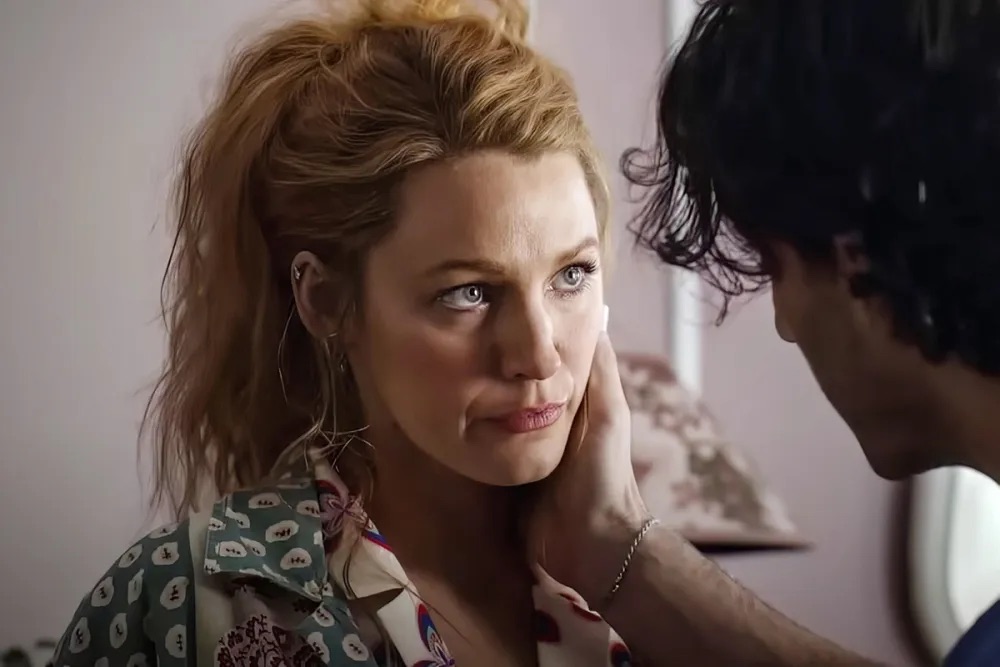
Your partner raises their hand to brush hair from your face and your body braces before your brain can say, “This is safe. This is love. This is not what you think it is.”
The flinch is one of the most recognizable markers of a body that learned fear early. It’s the nervous system responding faster than the conscious mind can override it. It happens in milliseconds, and it happens because the brain built a shortcut: sudden movement equals danger. It doesn’t wait to evaluate whether the movement is a threat. It reacts first and evaluates later. This is one of the many <a href=”https://cdv.org/understand-cdv/the-impact/”>long-term effects of childhood domestic violence</a> that can persist well into adulthood.
The flinch isn’t weakness. It’s evidence of what was endured. And it’s one of the clearest signs that childhood is still speaking to the body, even when the mind has moved on.
<h2>Feeling Stuck vs. Being Stuck</h2>
Fear doesn’t always look like flinching or scanning rooms. Sometimes it looks like paralysis. You know what you want to do, where you want to go, what you want to change. But you can’t move. You’re stuck.
Not because of a lack of ambition or ability. But because somewhere deep in the operating system, moving forward feels dangerous. Change feels dangerous. New things feel dangerous. Because in childhood, new things often were.
This kind of stuckness is fear wearing a different costume. It’s not laziness. It’s not indecision. It’s the nervous system pulling the emergency brake every time something unfamiliar approaches, because unfamiliar used to mean unsafe.
In the book <a href=”https://cdv.org/tools-and-resources/invincible/”>Invincible</a>, fear is called the eighth of ten lies that childhood domestic violence teaches. The lie says: you should be afraid. You should stay small. You should not take risks. The truth is something different: <b>you have already faced the most dangerous thing in your life.</b> It happened in childhood, and you made it through. What you’re facing now, as an adult with resources, perspective, and choice, is not the same.
<h2>Teaching Your Nervous System That the Danger Passed</h2>
The brain is remarkably good at learning. It learned fear quickly and deeply as a child. The encouraging news is that it can also learn safety. It’s slower and less dramatic, but it happens.
The first step is recognition. If you’ve read this far and thought, “This is me. This is why I do these things,” that recognition itself is significant. You’re not naming a flaw. You’re identifying a pattern that was installed without consent, and you’re seeing it clearly for the first time.
More than <b>40 million adults in the United States</b> grew up witnessing domestic violence in their home. That’s <a href=”https://cdv.org/understand-cdv/the-reach/”>1 in 8 people</a>. Many of them carry the same hypervigilance, the same flinch, the same feeling that something terrible is just around the corner. You are not alone in this, even though the experience can make it feel that way.
Naming the experience is where change begins. When you understand that anxiety has a specific origin, it stops being a mysterious affliction and becomes something you can work with. Not overnight. Not easily. But with the clarity that comes from finally understanding why your body does what it does.
<b>Take the free 1-minute CDV assessment → <a href=”https://cdv-association.surveysparrow.com/s/cdv-screen/tt-3eNiE”>Start here</a></b>
The assessment is private, takes about one minute, and is a starting point to understand how growing up with domestic violence may have shaped your life. You can also explore <a href=”https://cdv.org/understand-cdv/defining-cdv/”>what childhood domestic violence is</a>, learn about <a href=”https://cdv.org/2023/09/brain-impacted-by-childhood-domestic-violence/”>how CDV affects the brain</a>, or read about <a href=”https://cdv.org/2023/08/adhd-childhood-domestic-violence/”>the connection between CDV and ADHD</a>.
<h2>The Truth That Replaces the Lie</h2>
Fear said stay alert. Stay small. Stay ready. It said safety is temporary and danger is always close. That lie kept you alive as a child. But it’s keeping you from <i>living</i> as an adult.
The truth that replaces fear is this: <b>you can feel passion again.</b> When you stop bracing for the worst, you create space for something else. Excitement. Curiosity. The ability to walk into a room and just be in it, without mapping every exit and reading every face.
That’s not a fantasy. It’s what happens when you understand where the fear came from and give yourself permission to put it down.
If this resonated, fear isn’t the only lie. Many people who grew up with domestic violence also carry <a href=”https://cdv.org/2025/08/why-do-i-think-everything-is-my-fault/”>guilt that makes them feel responsible for everything</a>, <a href=”https://cdv.org/2026/08/why-do-i-get-so-angry-over-small-things/”>anger that arrives before they can stop it</a>, or <a href=”https://cdv.org/2026/08/why-do-little-things-make-me-spiral/”>a sadness that spirals from the smallest trigger</a>. These patterns are all connected, and understanding one helps see the others.
If you’re ready to take the next step, the <a href=”https://cdv-association.surveysparrow.com/s/cdv-screen/tt-3eNiE”>free CDV assessment</a> takes about one minute. If you’d rather keep reading, explore <a href=”https://cdv.org/for-those-impacted/i-experienced-cdv/”>stories from others who’ve been where you are</a> or download the <a href=”https://cdv.org/tools-and-resources/download-worksheets/”>free support worksheets</a>. And if someone came to mind while reading this, share this page with them.